Presiding influence: White Buffalo Calf Woman
Key energies: sweet prayers, calling in positive energy, caretaking, removing sorrow from the body, blessings, summer energy, softness, holiness, heartfelt prayers
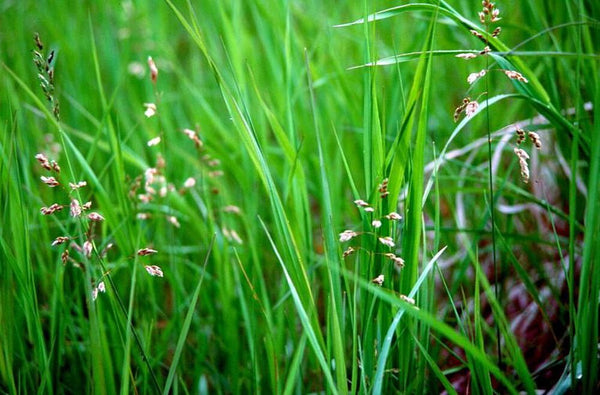
Every culture to have come in contact with sweetgrass has recognized its sacredness. Its botanical name, Hierochloe odorata, literally means “fragrant holy grass.” In Northern Europe, sweetgrass was scattered in front of churches on holy days so the heavenly fragrance would be released when people walked over it to enter. In North American traditional cultures, sweetgrass has an auspicious pedigree and is referred to as one of the four sacred medicines (the others being tobacco, white sage, and cedar). I was taught that it should not be used for the removal of negative energies (purification), but instead should be used after a cleansing rite to call in sweet, beneficial energies and spirits and send heartfelt prayers.
In perfumery sweetgrass is referred to as foin coupé, or “cut hay,” because it has the same beguiling scent as hay being cut and harvested on a warm summer evening. An interesting aspect of this absolute is that sweetgrass is cut and harvested in June and July and allowed to dry naturally in the sun until August. During this process, the grass becomes fragrant as coumarin, the aromatic lactone responsible for its sweet, haylike aroma, which is only liberated when the plant material is cut and dried.
The finished product offers a sweet, faintly herbaceous scent with jamlike notes of fig and prunes. Some even claim it smells like the sweet breath of young bovines.
You might also like